Conservation and Movement Ecology
I am an ecologist, interested in developing
methodology and theory to inform wildlife management decisions in a changing world
methodology and theory to inform wildlife management decisions in a changing world
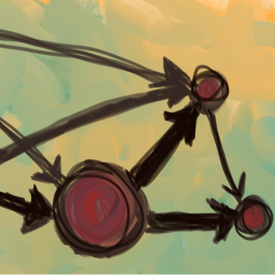
Conservation decision-makingBudgets are often restricted in conservation, and achieving the greatest benefit with limited funds is a crucial first step in minimising biodiversity loss. Managers must therefore make decisions about where, when, what and how frequently to carry out different conservation measures, despite uncertainties surrounding population size, where a species might be, and how effective the conservation intervention might be. I have therefore developped methods for optimising ranger patrols and optimising conservation in connected systems.
|
|
|
Connectivity Conservation
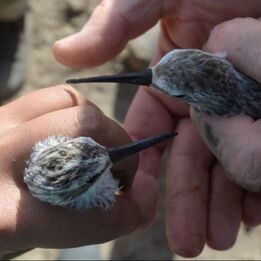
Natural systems rarely stand still. Most species fluctuate not only in their distributions, but also in their movements - but how should we conserve a moving target? Site loss will not only impact that site, but all the sites that are connected to it. Reserve systems are prone to failure where connectivity between sites is not accounted for. I have developped code for modelling networks and predicting population change under habitat loss and investigated this in a shorebird case study.
|
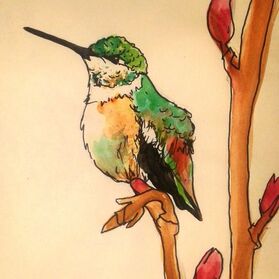
Animal migration and trackingRoughly a quarter of animal species migrate, but we still know remarkably little about where they go. I have done extensive work mapping migration and behaviour using multi-sensor gelocation methods, monitoring group dynamics during migration and developping R packages.
|
|
|
Population EcologyAnimal populations fluctuate both in time and space in response not only to each other, but also in response to their environment. I have been involved in theoretical modelling of invasive species spread, coral reef resilience and in modelling population trends in unmarked populations of shorebirds and dragonflies.
|
Machine Learning and AI
|
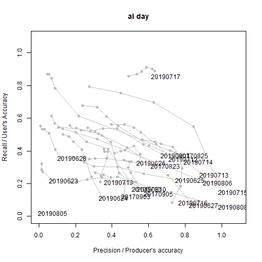
The increases in data availability and computer processing power have opened up opportunities for machine learning and neural nets. My more recent work is focussing on the use of Convolutional Neural Nets to classify meerkat calls into types. Currently I am working on the use of reinforcement learning in protected area prioritisation.
|
|
