Methods for Conservation and Ecology
I am an ecologist, interested in developing
methodology and theory to inform conservation decisions in a changing world
|
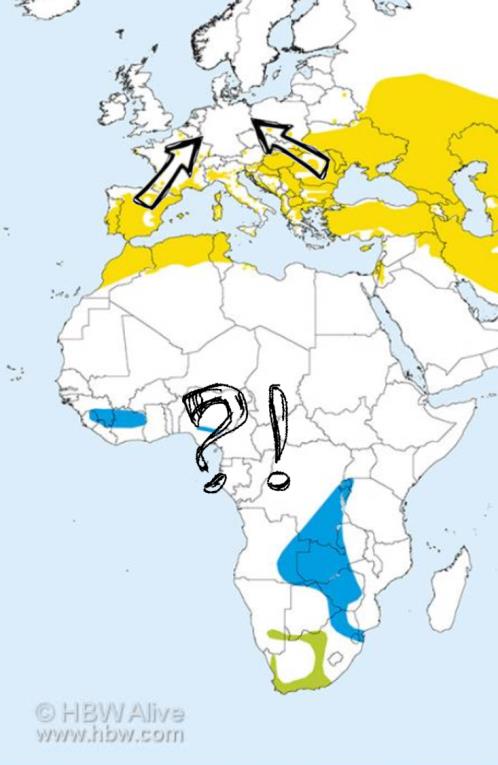
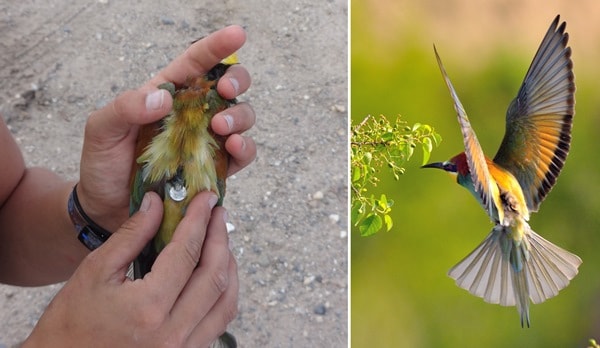
This is an article we wrote for the British Ornithological Union's blog which can be accessed here: https://www.bou.org.uk/blogs/range-expansion/ Kiran Dhanjal-Adams & Tamara Emmenegger Swiss Ornithological Institute, Switzerland LINKED PAPER Range wide migration corridors and non‐breeding areas of a northward expanding Afro‐Palaearctic migrant, the European Bee‐eater Merops apiaster. Hahn, S., Alves, J.A., Bedev, K., Costa, J.S., Emmenegger, T., Schulze, M., Tamm, P., Zehtindjiev, P. & Dhanjal‐Adams, K.L. 2019. IBIS, DOI: 10.1111/ibi.12752. VIEW Breeding range expansions The combined effects of climate and land-use changes have recently caused the breeding range of some species to expand. Yet we know very little about what these range expansions might mean for the migratory patterns of the individuals breeding in the newly acquired breeding grounds. Do they continue to overwinter in the same regions as their ancestors, or do they develop their own migratory strategies and non-breeding ranges? One such species that has expanded its breeding range northwards is the European bee-eater Merops apiaster. The abandonment of surface coal mines in regions such as East Germany has opened up habitat for bee-eaters to establish new breeding colonies. In regions such as Saxony Anhalt, the numbers of breeding pairs have even gone from 30 in 2003 to a whopping 1000 in 2018. However, it is unclear where the individuals breeding in these new population came from. Genetic analyses suggest that the species disperses widely, with individuals from these new colonies having mixed ancestry (Carneiro de Melo Moura et al. 2019, Ramos et al. 2013). Thus, we aimed to investigate where and when they migrated: whether individuals followed the behaviour of their source populations with many different migratory routes, or whether they developed their own strategy. Tracking migration We tracked the migration of bee-eaters by deploying geolocators in three distinct colonies: one at the Western edge of the range in Portugal, one at the Eastern edge in Bulgaria, and one in a recently colonized breeding population in Germany. We found that Portuguese and Bulgarian breeding birds migrated to Western and South-eastern Africa respectively, via straight southward routes. The newly established German-breeding colony however migrated along a new and undocumented migratory route, crossing the Mediterranean around the Balearic Islands and stopping over around Nigeria. Most of these birds then continued over to spend the nonbreeding residency period in the Congo basin. New non-breeding ranges suggests adaptation Though the migratory pathways were very different between the German-breeding and Bulgarian-breeding birds, their migratory timing was remarkably similar. This suggests that migratory phenology is triggered by adaptations to site-specific climate and weather conditions. Furthermore, the fact that the tracked birds from Germany all followed a new and distinct migratory route, suggests little influence of source populations in determining migratory pathway. Birds appear to optimise their migratory route to account for the specific requirements of their new ranges. Given the widespread human-driven changes we are currently observing across our landscapes, it is encouraging to note that birds can adapt their migratory strategies to novel environments, under the right conditions. Here is a video summarising the results: Acknowledgements
The Swiss Ornithological Institute developed the geolocator loggers described in the article and the Swiss federal office for the environment (FOEN) contributed financial support for the development of the tags (grant UTF 400.34.11). SOI-GDL3pam loggers were fitted under licence LAU 43.17-22480-58/2015. The Swiss National Science Foundation 31003A_160265 funded S.Hahn.
0 Comments
|
Kiran L. Dhanjal-AdamsAll views expressed are my own. Archives
July 2025
Categories |